We’re on a journey. Information. Insight. Collaboration. Art & Humanities. The Healing Arts, especially where the renowned natural healer Dr. Sebi is concerned. All of this is why we’re here. Head on over to the About Page for more reasons why.

We’re on a journey. Information. Insight. Collaboration. Art & Humanities. The Healing Arts, especially where the renowned natural healer Dr. Sebi is concerned. All of this is why we’re here. Head on over to the About Page for more reasons why.
In Seven Days in Usha Village: A Conversation With Dr. Sebi 20 Years Later, Beverly takes readers on a transformative journey through the famed healing retreat in Honduras. Blending cultural storytelling with wellness insights, the book revisits Dr. Sebi’s philosophies two decades later, offering fresh reflections for today’s audience.
The book captures Beverly’s immersive experience at Usha Village, weaving together conversations and holistic health practices, including Dr. Sebi’s African Bio Mineral Balance Therapy. It highlights Dr. Sebi’s enduring influence on natural healing, Afro-Caribbean traditions and global wellness.
With a mix of narrative and cultural commentary, Beverly bridges past and present, inviting readers to reflect on the relevance of Dr. Sebi’s teachings in modern times.
“Besides celebrating a milestone, the book offers new gems of information about the African Bio Mineral Balance Therapy and how Dr. Sebi used it to cure, yes cure, diseases like diabetes, sickle cell anemia, leukemia and other cancers in the United States and abroad,” says Beverly.
Seven Days in Usha Village: A Conversation With Dr. Sebi 20 Years Later is now available at bookstores and as an ebook.
https://www.sevendaysinushavillage.org/20th-anniversary-edition
About the Author
Beverly is a creative writer in indie publishing, blending nonfiction details with cultural storytelling. Her work includes articles published in The New York Amsterdam News, Howard Magazine and Medium.
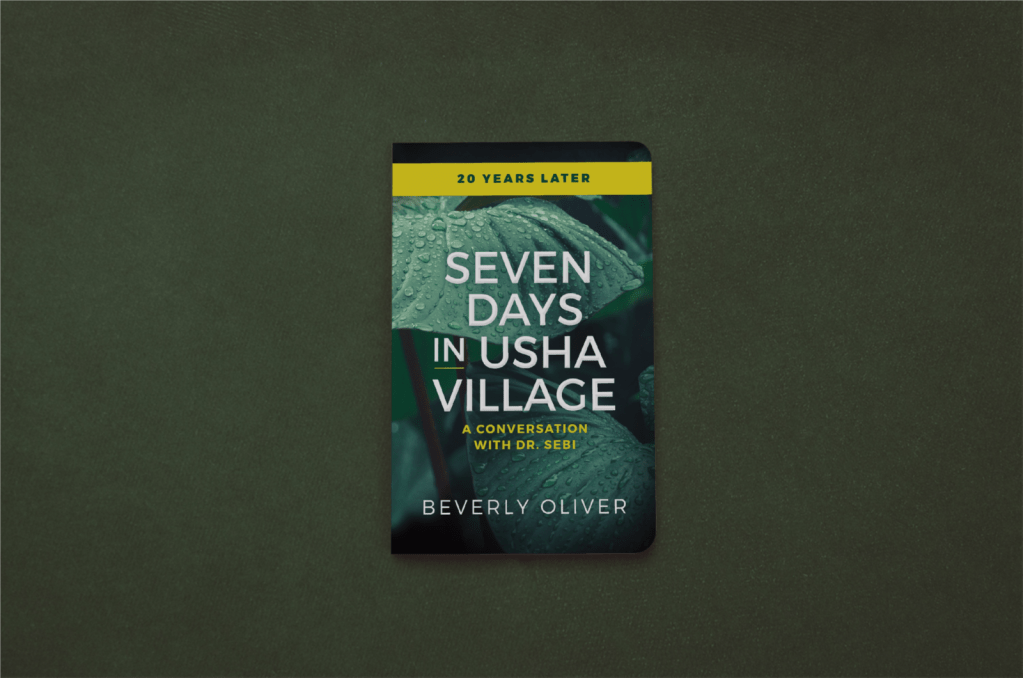
On November 26, indie author Beverly Oliver released Seven Days in Usha Village: A Conversation With Dr. Sebi 20 Years Later, a biographical book focused on the culture, observations and healing methods of renowned herbalist Dr. Sebi.
“November 2025 marks the 20th anniversary of my visit to Honduras, Central America, to interview Dr. Sebi, a man I feel is one of the greatest natural healers we’ve ever known. Seven Days in Usha Village: A Conversation With Dr. Sebi 20 Years Later is a book that commemorates that journey and offers an in-depth view of Dr. Sebi’s method of treating diseases like leukemia, sickle cell anemia and diabetes,” says Oliver.
Dr. Sebi, who died at age 82 in August 2016, called his method of healing the African Bio Mineral Balance Therapy, a natural healing process he used for more than 40 years, beginning with his own life, and on clients of all races. Seven Days in Usha Village: A Conversation With Dr. Sebi 20 Years Later keeps front of mind that practice and Dr. Sebi’s quest to share his knowledge of highly effective herbal medicine (a common term used to describe natural plant-based, chemical-less health treatments).
About the book, Reedsy Discovery book interviewer Kennedy Odindo writes, “For readers unaware of Dr. Sebi or aware but only a little, this book is indeed an eye-opener. With regards to what we eat and how best to protect ourselves against disease, he doesn’t fall short of advice and anecdotes that help reinforce his vision. There’s a lot to admire and borrow from this simple man; a lot of inspiration to draw from this book.” The paperback book is available at Barnes & Noble and other retailers. The ebook is available directly through the author’s website, https://www.sevendaysinushavillage.org/shop
A video preview of Seven Days in Usha Village: A Conversation With Dr. Sebi 20 Years Later
It’s a living, a career. A bookstore owner’s passion, even when competitors’ doors have closed for good, hinting that theirs could be next. They press on. Die-hard bibliophiles keeping literature, authors, and community spirit alive. Coffee and books, sometimes pastries too. Plenty of recommendations. Drop in. Stop by. Peruse, touch, flip through pages, watch your eyes happen upon a book and story you might otherwise pass by. Hit the jackpot if they elevate you to a whole new world of possibilities and landscapes. Sit opposite an author reading from her work—at the bookstore.
Their numbers in the U.S. have dwindled, down from 12,363 in 1997 to 10,800 today, yet bookstores are going to be all right. Anytime The Bookshop: A History of the American Bookstore becomes a 2024 New York Times bestseller, it’s evidence that bookstores will indeed be in the land of the living for some time to come. We still want them, engage with other book buffs in them, which is why I encourage you to get your copy of Seven Days in Usha Village: A Conversation With Dr. Sebi 20 Years Later from your local bookstore. Several bookstore owners have online catalogs as well. Build your home library. Let bookshops help you.
IngramSpark is the distributor/printer of Seven Days in Usha Village: A Conversation With Dr. Sebi 20 Years Later.
https://www.sevendaysinushavillage.org/blog

“People come to me with leukemia. They say, ‘Dr. Sebi, the doctor said that my child will die with leukemia. What can you offer that the physician did not offer?’ I tell them that all I have to offer is a nutritional approach to disease. We begin by cleansing away the toxins that are invading the whole biology.”
—Dr. Sebi, November 2005

There’s more about how Dr. Sebi cures diseases considered incurable in this celebration of my interview with him in La Ceiba, Honduras, twenty years ago and this new edition of Seven Days in Usha Village: A Conversation With Dr. Sebi. In the new chapter, “Dr. Sebi Shared More That Week in Honduras: His Methodology,” you’ll read, among other things, why sickle cell anemia, primarily found in Black people, is essentially leukemia and anemia in other races. Iron deficiency is the culprit.
The Prologue and end of the book have changed, with a full circle tribute to Dr. Sebi by the person who helped launch his career in the U.S., Adio Kuumba Akil. She met him for the first time at the Garden Holistic Institute in St. Croix, Virgin Islands, while learning natural healing and food therapy.
Seven Days in Usha Village: A Conversation With Dr. Sebi: 20 Years Later continues to shine a light on Dr. Sebi’s natural healing methodology, his raison d’être, his thinking-outside-the-box prescription for optimal health—at any age. It also celebrates his more than forty-year quest to share with the world alternative medicine that healed him (widely known as well as unfamiliar plants) and that same method he used to heal others.
Paperback Book Available November 2025.
Ask for it at your favorite bookstore. IngramSpark is the distributor.
Audiobook. eBook. Print. Whatever can be done to spread his legacy, his life’s story, the therapeutic healing procedure he crafted, Dr. Sebi’s protégés—his got-your-back advocates and awestruck healed clients who named him Dr. Sebi—clearly stand front and center in that quest; and for almost 20 years, Seven Days in Usha Village: A Conversation With Dr. Sebi has played its role in propelling Dr. Sebi and his African Bio Mineral Balance system into the future.
When November 2025 arrives, 20 years will have passed since a week-long visit to La Ceiba, Honduras. That seven-day fireside chat. A crash course in botany, natural botany. A deep delve into Dr. Sebi’s metamorphic upbringing from Alfredo to Fred to Mama Hay.
A new, extended edition of Seven Days in Usha Village: A Conversation With Dr. Sebi will mark and celebrate the book’s 20-year milestone.
Below, Dr. Sebi on his book and foreigners in Honduras

https://namawell.com/pages/dans-story
Read Dan’s story all the way to the end if you have 10-15 minutes. Time well spent. When you do, you might find yourself asking, as I did, “Why does all this sound so familiar?”
I found Dan’s story after watching a video on the FullyRawKristina YouTube channel. Kristina titled the gem of a video “How I Make Real Coconut Milk From Scratch.” Again, time well spent, about 14 minutes, when you watch. Long story short, Kristina is a raw vegan and a spokesperson for the Nama M1 Nut Milk Maker. The owner/founder of Nama is Dan.
When you read why Dan started Nama, you’ll be reminded of what Dr. Sebi has always encouraged us to do nutrition-wise and agriculturally.
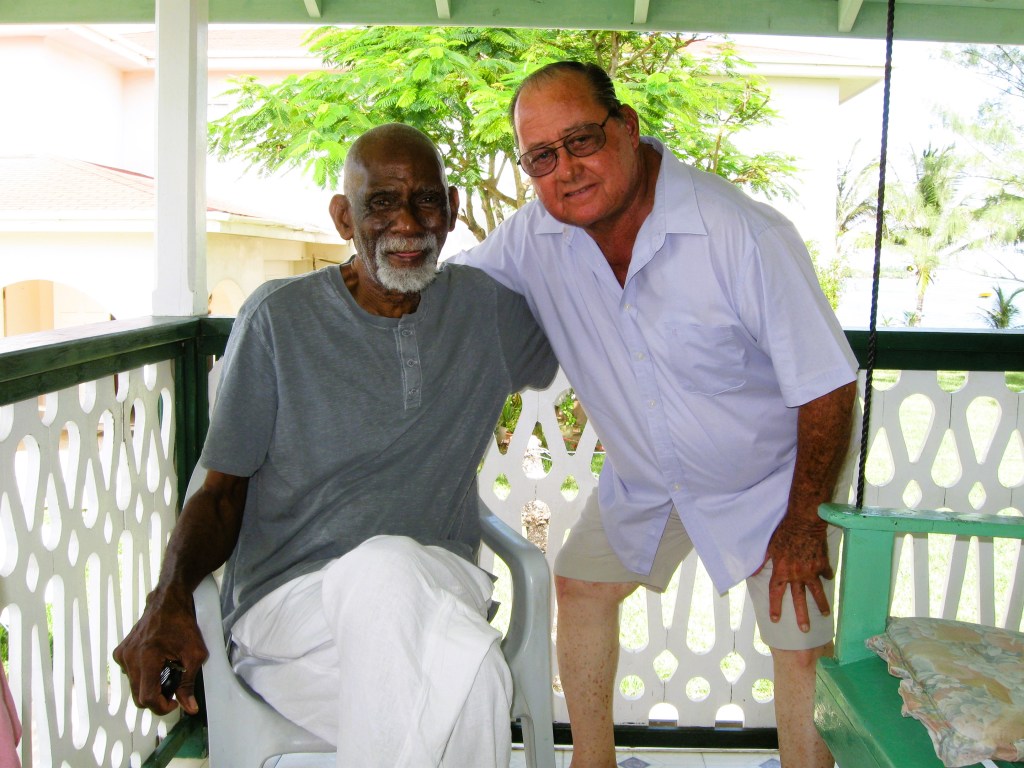
Alfredo Bowman Sr. (a master healer affectionately and widely known as Dr. Sebi)
November 26, 1933 – August 6, 2016
“I remember in my dreams I dream that I fly every day. At night I fly. And when I come back on the ground, boy what a relief it is when I fly. And my life reflects that flying. Because I see things from the top and it becomes easy. . . . By the top I mean that I see things from the top where I can grasp the whole spectrum. I have a larger platform.”
— Dr. Sebi, Herbalist and fan of Weather Report’s “Mysterious Traveller”
But what of the body after the two-step, after flying high in a dream? Where might energy replenishments, reinforcements be? Deep dive healing in the sea, the seaweed, the Irish sea moss (Chondrus crispus). And from the depths of the sea, it rises—dinner table, skin care, immune system-boosting medicinal, as jellies, puddings, smoothies. One of the best breakthroughs in healing since penicillin. Yet, today, seaweed, also called sea moss, algae and kelp, ranks as a lesser-known but growing-in-stature body helper.
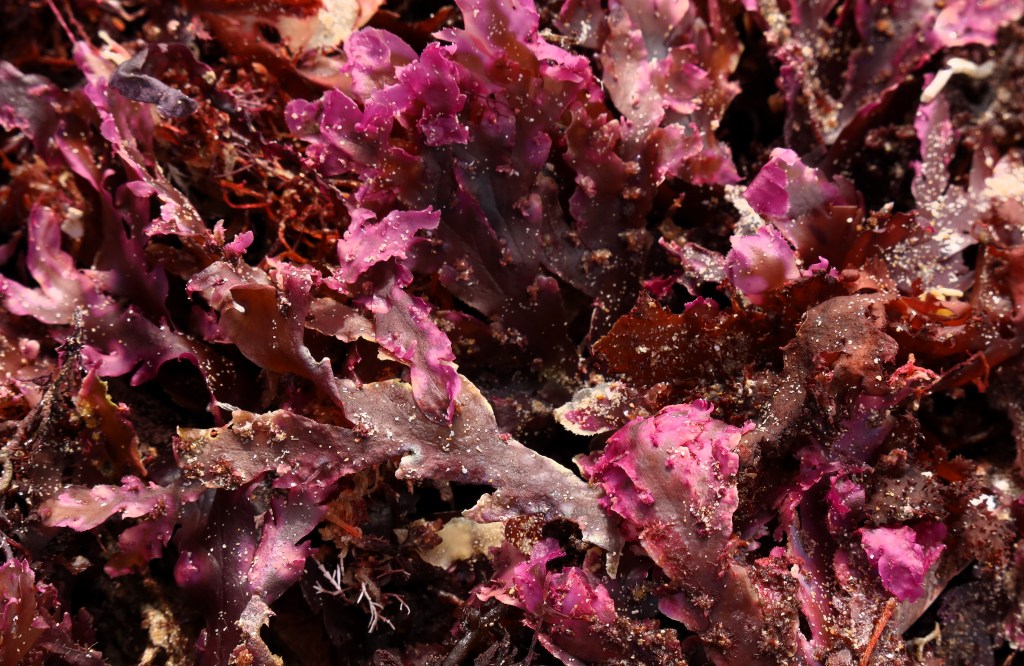
In his April 2014 article in Mother Earth News magazine, Christopher Nyerges writes, “Seaweed seems to be nothing more than gooey, smelly, fly-infested garbage; however, as unpalatable as they might seem, seaweeds are in fact extremely important plants—nutritious eaten as is or lightly cooked.”
Nyerges mentions nutritionist and naturopathic physician Paavo Airola who says, in his book, Are You Confused?, “Kelp is one of the ten plants that helps the body’s glands reach their peak of healthy activity. Many seaweeds—most commonly kelp—when powdered yield potassium chloride, a salt substitute. This is a godsend for those who must restrict the amount of sodium chloride in their diet.”
And consider these facts about an all-time favorite seaweed of natural healer Dr. Sebi—bladderwrack—an ocean-grown brown seaweed found in northern coasts on the Atlantic and Pacific sides of the United States. The amount of iodine bladderwrack contains is sufficient to treat thyroid disorder, diabetes and food addictions. Iodine, according to Nyerges’ research, is necessary for “the proper functioning of the thyroid gland and has been used for the treatment of goiter for over 5,000 years.”
Goiter is an enlarged thyroid gland and can grow to a swelling or bulge on the neck. People who have this condition are iodine-deficient, and since the body doesn’t produce iodine, and it’s an important nutrient for thyroid health, it’s crucial to get it from foods or iodine-rich seaweeds like bladderwrack.
Edible Seaweeds
More than likely, you’ve seen them—brown, red, green algae found at beaches and in marine waters. Irish moss grows in cooler waters in Europe, North America, Canada and Peru, while St. Lucia sea moss grows in warmer waters in the Caribbean, Southern Asia and Africa.
According to National Geographic, “Seaweed is a superfood you can forage. . . The newest seaside trend is searching for seaweed—a fun and sustainable way to explore the world’s coastal areas.”
Seaweed is a win for you, the ocean and the planet. — World Wildlife Fund
As the number of seaweed producers increases, you’ll find their products in herbal compounds; in seasonings due to seaweed’s natural salt and minerals; in dried seaweed snacks like nori; in jars of sea moss mixed with fruit due to its thickening and jelling activity, an activity also used in the production of sea moss skin care products.
What Seaweed Advocates Have to Say
Wild Irish Seaweed Ltd. Did you know that seaweed has more vitamin C than oranges? Carrageen, sugar kelp, bladderwrack and nori have great amounts of vitamin C. Vitamin C produces collagen so it is essential for the repair of tissue. . . . All our seaweed comes from the pristine nutrient-rich waters of the Atlantic Ocean.
Herban-Oasis/Original Thought. Chondrus Crispus (Irish sea moss) adds strength, resilience and elasticity to all connective tissues, joints and muscles. Great for strong bones.
World Wildlife Fund. Americans tend to think of seaweed as the stuff that gets stuck to your legs when you go swimming at the beach—not a food that’s highly nutritious, easy to grow and beneficial to ocean ecosystems. But seaweed is all of these things.
Sebi’s Daughters. Sea moss is an easy, one-stop way to ensure your body is getting the nutrients it needs. Organic sea moss powder is rich in essential vitamins and minerals, including iodine, calcium, magnesium and potassium; easily incorporate this powder into your favorite natural foods and smoothies for a nutritious boost to your diet.
Dr. Sebi, sea moss and bladderwrack’s greatest cheerleader. If you want your bones strong, you have to go to the sea moss, and it will strengthen your calcium cells.
So go on, dance a two-step beneath the stars. Move, groove in the cosmos, fortified with a purple-pink partner from the sea—algae, kelp, the seaweed.
Brown sun-kissed skin. Tall. He towers above her. His stance reminiscent of a Maasai’s on Kenya’s savanna. But no warrior or oxen milk drinker is he.
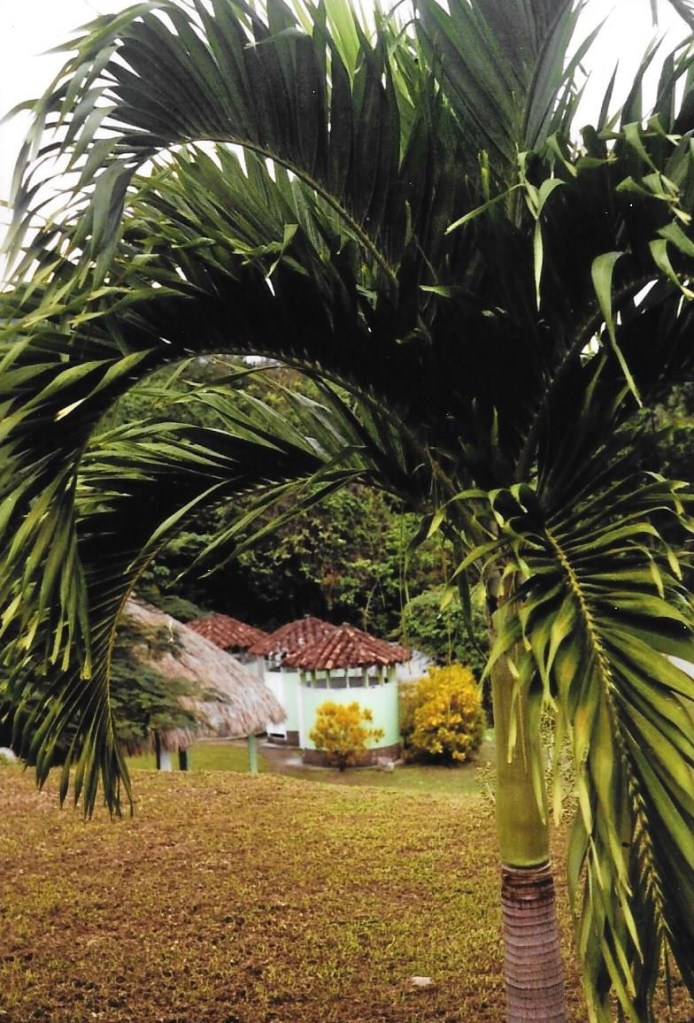
“Love for a Moment,” a plant he loves back, shacks up in the village feeling no shame in populating this oasis in the tropics. The man from the bush revels in sharing his beloved botanical beauty with the awestruck Black Girl, whose walk through the bush reaps scattered ripe orange mangoes—the juicy, fibrous variety, when eaten at sunset, requires a napkin or two to wipe all that dribbling sweet goodness.
Nighttime—in the land of the man from the bush—bares its soul across the sky, where shooting stars dance and flash, crisscrossing the Universe. It’s a cosmic procession of life stage right, stage left, down center.
“What is the cosmic procession of life?” the Black Girl asks the man from the bush.
As cool and groovy as a laid-back, chillin’ brother can be, he said, “It’s an energy that you receive. It’s not a piece of thing or stuff you put on a blackboard. It’s an energy that gives you the privilege to act on that which is necessary to preserve your life. That is the connection. What is it? Well, I have to use some English words, right? Well, there aren’t any English words to describe that because life was here long before there was an English word. So we can’t use an English word to describe that. So how did we get the message? There again, the same way the eagle got its message to make a nest, the cosmic arrangement of things, from the vibration.”
“What more can the man from the bush tell me about the cosmos?” she wondered.
As if reading her mind he said, “What is the need for the cosmic way of life? It is needed because we are a product of this thing called life procession—the Earth. We are a product of such.”
Man from the bush, Alfredo Bowman Sr., better known as Dr. Sebi,
grandson of Mama Hay, we celebrate the 90th anniversary of your birth.
Pray tell, what is your next phase?

Sunrise
November 26, 1933
Transition
August 6, 2016

Not in the Mojave Desert or the Sonoran. Not in Joshua Tree National Park or the land of giant saguaros, Saguaro National Park. Her stroll, each step, winds through a man-made desert called Desert Garden, one of a dozen ecosystems created on over 130 acres of land bequeathed to Los Angeles County by railroad magnate and art collector Henry E. Huntington, a man also known as a voracious reader and book collector.
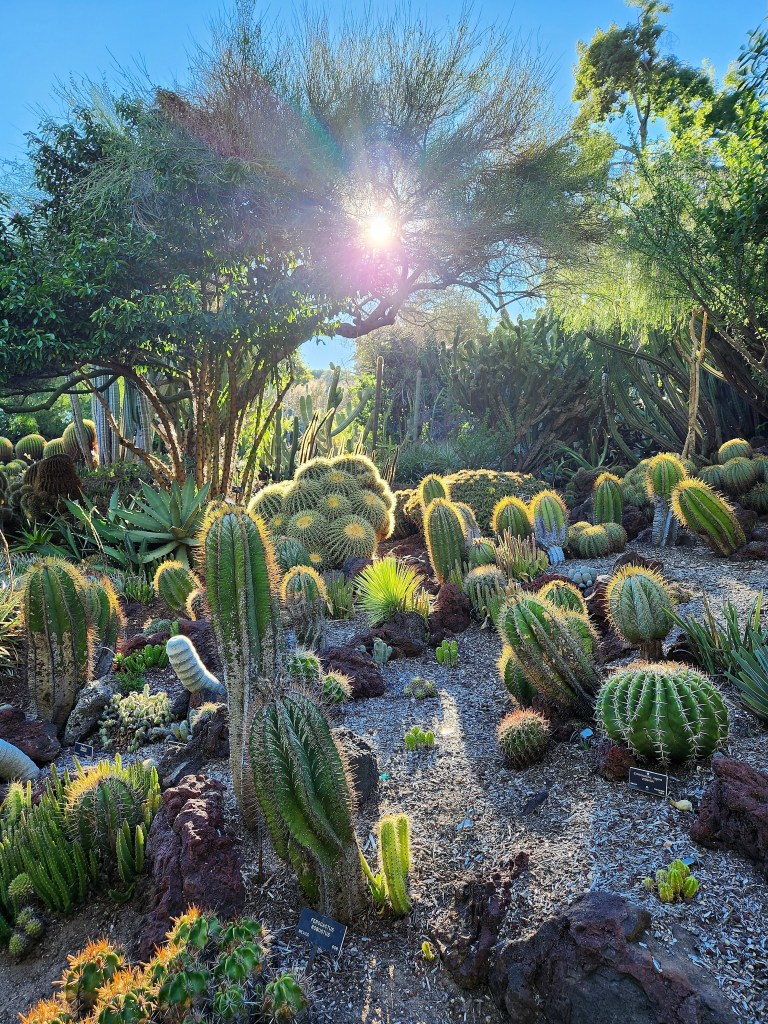
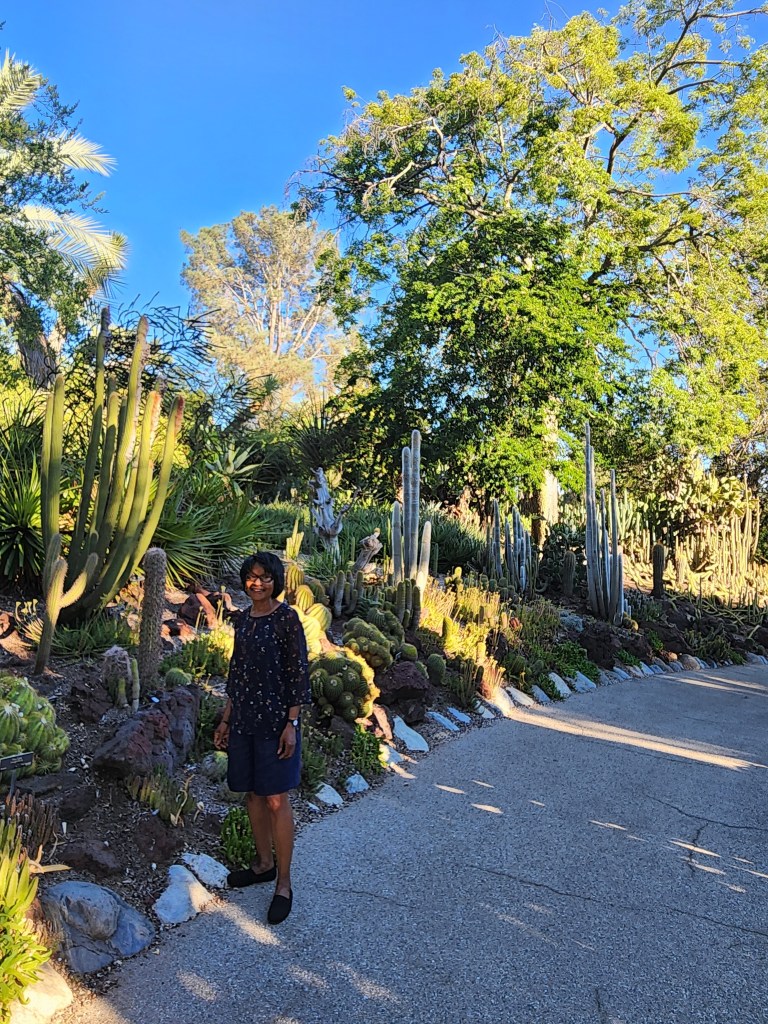
Sometimes she feels like a female version of herbologist Dr. Sebi, out and about among plants. This time at The Huntington Botanical Gardens in San Marino, California. She walks down a paved path spread down the middle of Huntington’s Desert Garden. She finds tall and majestic saguaros—on the left side and right—like the giant ones in Arizona.

Succulents and golden barrels planted at the base of saguaros catch the Black girl’s eyes.
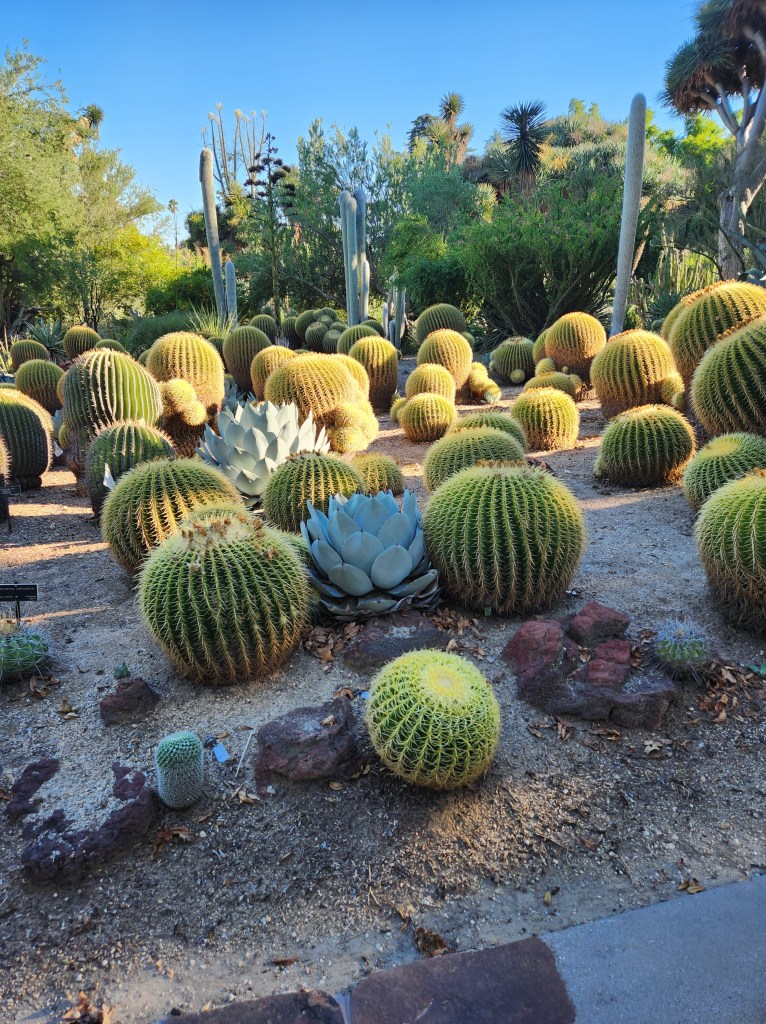
It’s a summer evening between 5:30 p.m. and 7:30 p.m., her favorite time on this walk, when the sun kicks back, settles down and shines mellow orange and yellow hues over this man-made oasis. A starlight’s romance with Earth that time of day.
A Black girl’s mentor once said:
“Basically, you still have the moisture, the fauna, the flora that one expects to exist in a tropical country. And I guess I enjoy that.” page 102
“I selected plants whose molecular structure is complete.” page 48
“I learn about the use of the elderberry in Yugoslavia. This man was playing the piano and he was drinking out of his glass, and he was very happy. So I asked the bartender what was that? And he looked at the bottle—elderberry. He said, ‘That man is not going to get tired because he drinks elderberry.’ And many years later, when I was assisting someone in Los Angeles, a lady in her 85th year, she was very weak. I remembered the elderberry.” page 112
—Dr. Sebi in Sojourn to Honduras Sojourn to Healing: Why An Herbalist’s View Matters More Today Than Ever Before
 JBDavid Communications